
Deciding to seek help for a substance use disorder is a critical first step, and the next is choosing the right path forward. The main difference between outpatient vs. inpatient rehab comes down to where you live during treatment: inpatient care means residing at the facility with 24/7 support, while outpatient programs allow you to live at home and attend scheduled sessions. Understanding which model fits your needs is essential for building a strong foundation for recovery in Newport Beach, CA.
This content is informational and not medical advice.
Table of Contents
- Comparing Inpatient vs. Outpatient Rehab at a Glance
- When Inpatient Rehab Is the Right Choice
- How Outpatient Rehab Provides Flexibility
- Practical Examples
- Frequently Asked Questions
Comparing Inpatient vs. Outpatient Rehab at a Glance

When you explore outpatient vs. inpatient rehab, the primary distinction is the living arrangement. Inpatient programs require you to live on-site, fully immersed in a structured, 24/7 therapeutic environment. Outpatient care offers flexibility, allowing you to live at home and commute for treatment.
This core difference impacts every aspect of the recovery experience, from your daily schedule and level of clinical supervision to how you balance treatment with family and work. Each model is designed for different clinical needs and life circumstances. You can explore different levels of care to better understand these distinctions.
Core Environmental Differences
Inpatient rehab creates a protective, structured environment. By removing you from daily triggers, stressors, and access to substances, it allows for an exclusive focus on healing without outside distractions. This stable setting is often necessary during the fragile early stages of recovery.
Outpatient programs challenge you to apply recovery skills in real time. You attend therapy at a center in Newport Beach or a nearby city like Costa Mesa, then return home to navigate your daily life. This approach helps build and strengthen coping strategies in a real-world context.
Supervision and Intensity
The level of clinical oversight is another key differentiator. Inpatient facilities provide round-the-clock medical and therapeutic support. This constant supervision is critical for individuals who are medically unstable, experiencing severe withdrawal, or managing co-occurring mental health conditions.
Outpatient programs provide scheduled support. You have direct access to a clinical team during program hours but are responsible for managing your time and choices outside of the center. Intensity varies from intensive outpatient programs (IOP) that meet multiple times a week to less frequent standard outpatient sessions.
Side-by-Side Comparison
| Feature | Inpatient Rehab (Residential) | Outpatient Rehab (PHP/IOP/OP) |
|---|---|---|
| Living Situation | Reside onsite at the treatment facility. | Live at home and commute to the center. |
| Daily Commitment | Full-time, highly structured daily schedule. | Part-time sessions a few hours per day, several days a week. |
| Supervision | 24/7 medical and clinical monitoring. | Access to staff only during program hours. |
| Best For | Severe substance use disorders, medical instability, high relapse risk, or an unsupportive home environment. | Mild-to-moderate substance use disorders, a stable and supportive home life, and a high level of motivation. |
| Life Integration | Work, school, and family responsibilities are paused. | Can often maintain work, school, and family obligations. |
| Peer Support | Immersive community with other residents. | Group therapy with peers during scheduled sessions. |
When Inpatient Rehab Is the Right Choice

Inpatient rehabilitation, often called residential treatment, is the most intensive level of care. The decision to enter an inpatient program is typically driven by clinical necessity, as it requires you to live at a treatment facility and pause outside life.
This model is designed for those who need a controlled, highly supportive environment to begin recovery. By removing you from a daily life that may be filled with triggers, stress, and access to substances, an inpatient program allows you to focus completely on healing. This break is often what makes it possible to build a solid foundation for sobriety.
The Role of 24/7 Medical and Clinical Supervision
A significant benefit of inpatient rehab is having medical and clinical staff on-site around the clock. This 24/7 supervision is a critical safety net, not just a comfort measure.
For a person who has been drinking heavily or has a dependency on benzodiazepines, stopping use can trigger severe withdrawal symptoms. Inpatient care ensures medical professionals are present to manage symptoms, provide medication, and handle any emergencies. This is essential during the detoxification phase.
Beyond physical safety, this round-the-clock support is just as crucial for mental and emotional stability. Having a therapist or trained staff member available at any hour can be the difference between a learning moment and a setback.
A Structured Environment for Healing
Life in residential treatment is highly structured. Days are carefully scheduled with a blend of therapies and activities, creating a predictable rhythm that contrasts with the chaos of active substance use.
A typical day may include:
- Individual Therapy: One-on-one sessions with a therapist to address personal history, co-occurring disorders, and treatment goals.
- Group Therapy: Facilitated sessions where you can share experiences with peers, building a sense of community and connection.
- Family Counseling: Guided conversations aimed at healing relationships and educating loved ones on how to support the recovery journey.
- Holistic Activities: Many Newport Beach centers integrate practices like yoga, mindfulness, or fitness to promote overall well-being.
This routine helps replace destructive habits with healthy, sustainable coping skills.
Who Is a Candidate for Inpatient Care?
While every situation is unique, inpatient rehab is strongly recommended for a person who:
- Is at risk for severe or medically complicated withdrawal.
- Has a co-occurring mental health disorder (dual diagnosis) requiring intensive, integrated treatment.
- Lives in an unstable, triggering, or unsupportive home environment.
- Has tried outpatient programs before and continued to struggle.
- Is experiencing a severe, long-standing substance use disorder.
By creating a safe, trigger-free space, inpatient rehab provides the time, focus, and professional guidance needed to stabilize and build skills for a life in recovery. Research on the effectiveness of different rehab models often indicates higher program completion rates for residential care.
How Outpatient Rehab Provides Flexibility
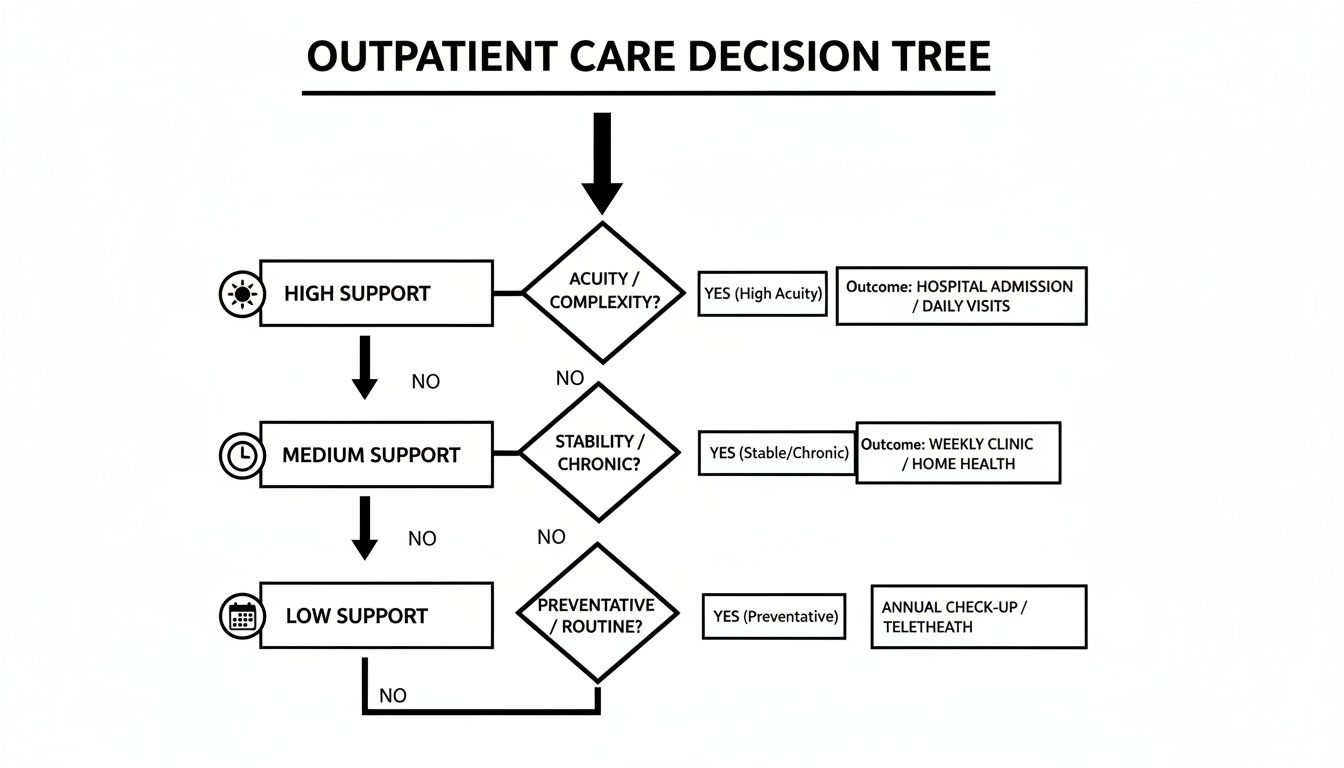
When pausing your entire life for inpatient rehab is not feasible, outpatient programs offer a different path. This approach integrates recovery into your daily life by allowing you to live at home and attend treatment on a set schedule.
For many professionals, students, or parents in communities like Huntington Beach and Laguna Beach, stepping away from responsibilities for 30 to 90 days is not an option. Outpatient care makes it possible to get clinical support without sacrificing your job, family, or education.
Levels of Outpatient Care
Outpatient treatment is a spectrum, with varying levels of intensity to meet different needs.
The main tiers include:
- Partial Hospitalization Program (PHP): The most intensive level of outpatient care. You attend treatment five to seven days a week for several hours each day. PHP is an effective step-down from residential treatment or a starting point for someone who needs daily structure but has a safe home environment.
- Intensive Outpatient Program (IOP): A step down from PHP, an IOP typically involves therapy three to five days a week for about three hours per session. This format provides robust clinical care while allowing more time for work or family, making it a popular choice across Orange County.
- Standard Outpatient Program (OP): The most flexible option, usually consisting of one or two therapy sessions per week. It is a good fit for someone with a mild substance use disorder or as long-term support to maintain sobriety after completing a more intensive program.
Who Benefits from a Flexible Model?
Outpatient rehab is most effective when you are medically stable and have a supportive home environment. This model allows you to apply what you learn in therapy to your life immediately. You might learn a new coping skill in a morning session and use it that same afternoon, building confidence and resilience.
According to a SAMHSA report on treatment trends, outpatient services have become a primary mode of care nationwide. This highlights a preference for recovery that is integrated into the community.
The flexibility of outpatient care requires a high level of personal motivation. Success depends on your commitment and having a reliable support system. Tapping into local recovery resources in Orange County can add another layer of community support to your journey.
Practical Examples
Making the choice between inpatient and outpatient rehab can feel abstract. These real-world examples can help you understand how a person's specific circumstances point toward a certain level of care.
- If someone is shaking, sweating, or nauseous after stopping alcohol use, they may be experiencing withdrawal and require medical detox, which is typically followed by inpatient care. Outpatient is not a safe starting point.
- If someone is unable to stop using a substance despite negative consequences but is medically stable, residential or inpatient rehab is likely the appropriate choice to provide structure and remove them from a triggering environment.
- If someone has a supportive family, a stable job, and is not experiencing severe withdrawal symptoms, an Intensive Outpatient Program (IOP) in Newport Beach can provide structured care without requiring them to live at a facility.
Questions to Ask a Treatment Center
When you contact an admissions advisor, you are interviewing them to see if their program is the right fit. Having questions ready can help you make an informed decision.
Consider asking the following:
- “Do you provide medical detox onsite, or do you refer to another facility?”
- “What does a typical weekly schedule look like in your residential and IOP programs?”
- “How do you treat co-occurring disorders like anxiety or depression?”
- “What insurance plans do you accept, and can you help me verify my benefits?”
- “What does aftercare planning and support look like after I complete the program?”
A quality treatment center will answer your questions patiently and without pressure. The goal of an initial call is to gather information. One of your first steps can be to verify your insurance coverage for rehab to understand your options.
Frequently Asked Questions
Navigating the choice between outpatient vs. inpatient rehab can bring up many questions. Here are clear answers to some of the most common ones.
Is inpatient or outpatient rehab more effective?
Effectiveness is not about one model being universally "better." It is about the right clinical fit for an individual. For a person with a severe substance use disorder, a history of relapse, or a co-occurring mental health condition, inpatient rehab is often more effective due to its 24/7 immersive structure. For someone with a mild SUD and a strong support system, an outpatient program can be highly effective because it integrates recovery skills into daily life. A professional assessment is the best way to determine the appropriate level of care.
Can I keep my job while attending rehab?
Yes, this is a primary advantage of outpatient programs. Intensive Outpatient Programs (IOP) are often designed with working professionals in mind, offering evening or weekend sessions. Inpatient rehab requires a leave of absence from all outside responsibilities, including work. The Family and Medical Leave Act (FMLA) may provide job protection while you attend treatment for a serious health condition like a substance use disorder.
How long does rehab typically last?
The duration of treatment varies based on the level of care and individual progress.
- Inpatient/Residential Programs: A typical stay is between 30 and 90 days.
- Outpatient Programs: A Partial Hospitalization Program (PHP) may last a few weeks, while an IOP often runs for 8 to 12 weeks. Standard outpatient therapy can continue for a year or longer as part of an aftercare plan.
What is the cost difference between inpatient and outpatient care?
Inpatient rehab costs more than outpatient care because the price includes housing, meals, and 24/7 medical and clinical staff. Outpatient programs are more affordable because they do not include room and board. Most health insurance plans provide coverage for both types of care, but benefits can differ. It is important to verify your insurance coverage to understand your financial responsibility.
What should I do if I relapse after treatment?
Relapse does not mean failure; it indicates that the treatment plan needs adjustment. If a relapse occurs after completing an outpatient program, it may suggest that a higher level of care, such as inpatient treatment, is needed. If it happens after an inpatient stay, the focus may shift to strengthening the aftercare plan. This could involve stepping down into an IOP, increasing therapy sessions, or engaging with support groups in Newport Beach or nearby Costa Mesa.
Finding the right treatment is a personal journey. The goal is to provide you with clear, reliable information so you can make a confident decision for yourself or a loved one. When you are ready, you can compare detox and rehab programs in Newport Beach.