
Disclaimer: This content is informational and not medical advice.
Exploring addiction treatment often brings up questions about different therapeutic approaches. One powerful option you might encounter is animal assisted therapy programs. This is not simply about petting a friendly dog for comfort; it is a structured, goal-oriented clinical practice where a trained animal is intentionally included in therapy sessions, guided by a licensed professional to support your recovery.
For individuals seeking help in Newport Beach, CA, and surrounding areas, these programs offer a unique way to build trust, learn healthy coping skills, and address emotional barriers that can be difficult to manage with talk therapy alone. This guide explains how these programs work and what to look for in a quality provider.
Table of Contents
- What Is Clinical Animal Assisted Therapy?
- The Clinical Benefits of Animal Therapy in Recovery
- What Kinds of Animals Are Used in Therapy?
- How AAT Fits Into Your Treatment Journey
- Practical Examples
- Finding Quality Animal-Assisted Therapy in Newport Beach
- Frequently Asked Questions About Animal Assisted Therapy Programs
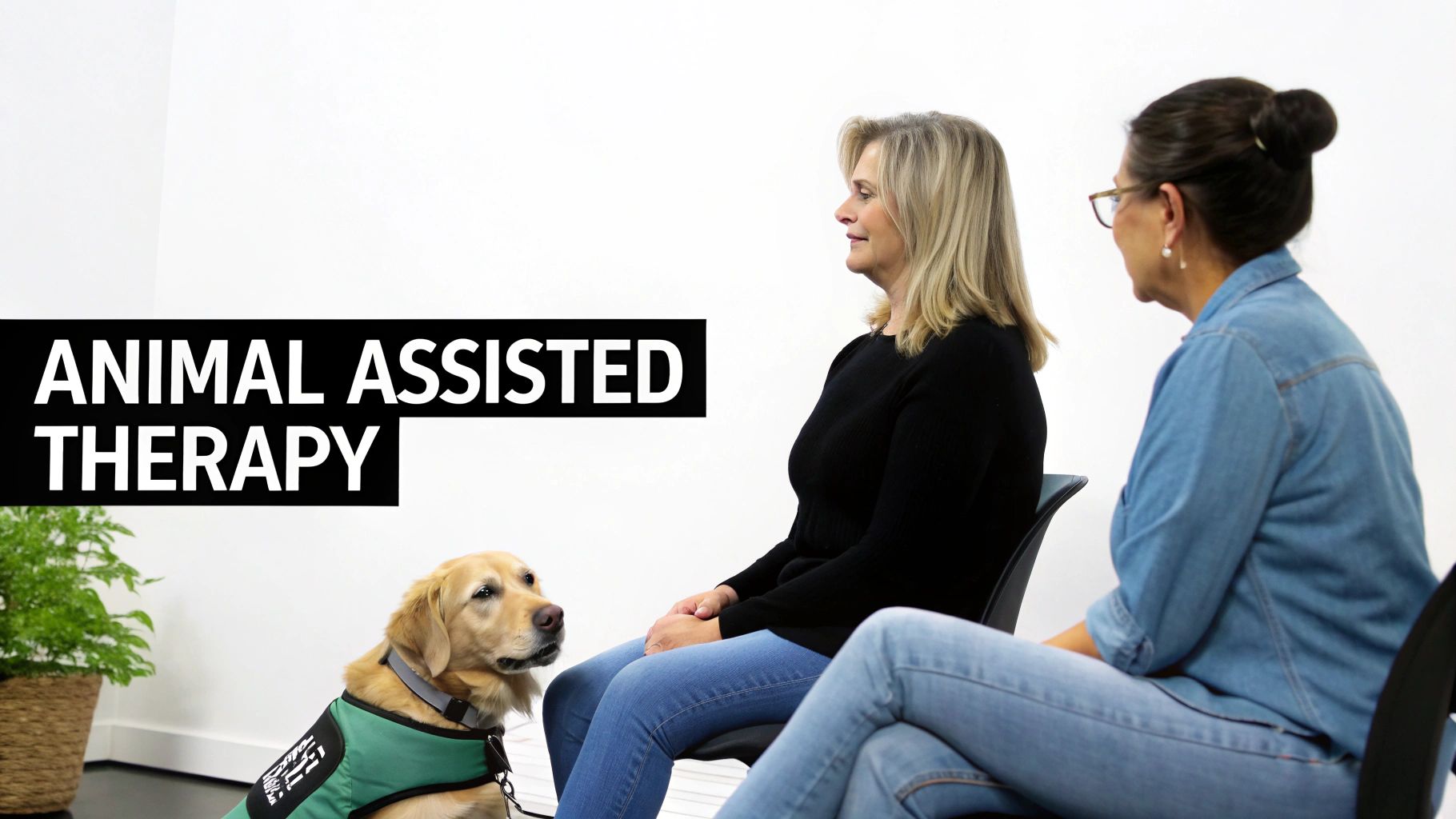
What Is Clinical Animal Assisted Therapy?
True Animal Assisted Therapy (AAT) is a clinical intervention that purposefully integrates a trained animal into the therapeutic process. It is a goal-driven method where the animal acts as an active partner in treatment, working alongside a licensed therapist to help you achieve specific clinical objectives.
This approach is particularly effective for people with substance use disorder and co-occurring mental health conditions like trauma, anxiety, or depression. For many entering recovery, building trust is a significant challenge. The calm, non-judgmental presence of a therapy animal can create a safe, disarming environment to begin exploring difficult emotions.
The Difference Between AAT and Other Animal Interactions
It is important to distinguish AAT from other types of human-animal interactions to ensure you are receiving clinical care.
- Emotional Support Animals (ESAs) provide comfort and companionship but are not part of a formal treatment plan led by a therapist.
- Animal Assisted Activities (AAA), such as volunteers bringing pets to a hospital, are meant to boost morale and provide a pleasant diversion. They do not have the specific, measurable therapeutic goals that define AAT.
In AAT, the animal is more than a companion; it serves as a catalyst for therapeutic change. A therapist carefully structures interactions to help you practice skills like emotional regulation, boundary-setting, and building healthy attachments—all of which are essential for lasting recovery.
Key Elements of a Clinical Animal Assisted Therapy Program
To ensure a program is genuinely therapeutic, it must have a solid clinical framework. Here are the core components that distinguish formal AAT.
| Component | What It Means for Your Recovery |
|---|---|
| A Licensed Therapist | A credentialed mental health professional guides every session, ensuring interactions are safe and clinically productive. |
| Specific Treatment Goals | Each session is designed to address measurable goals from your treatment plan, such as reducing anxiety or improving communication. |
| A Certified Therapy Animal | The animal has been assessed and trained for its temperament, making it a reliable and safe partner in your therapy. |
| Structured Sessions | Activities are planned by the therapist to help you gain insight and grow, moving beyond unstructured playtime. |
When evaluating Newport Beach rehab facilities or options in nearby Costa Mesa and Irvine, the presence of these elements indicates a legitimate, high-quality program.
The Clinical Benefits of Animal Therapy in Recovery
The work of recovery can feel emotionally taxing. Interacting with an animal—such as petting a dog or stroking a horse—can create measurable changes in your body and mind. This interaction can lower stress levels, making it easier to engage in the deeper therapeutic work required for healing.
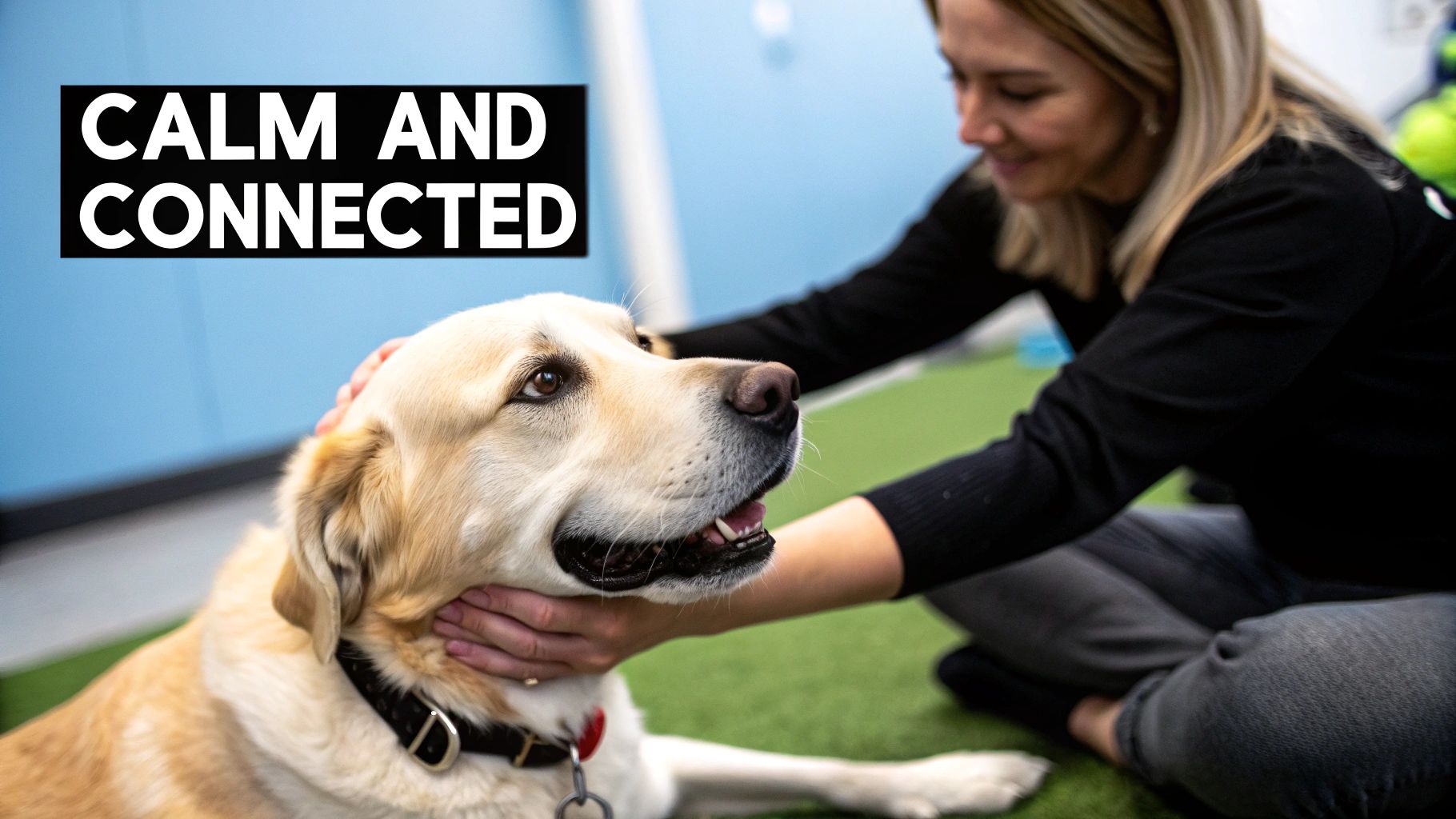
There is science behind this effect. Spending time with animals can trigger the brain to release oxytocin, a hormone associated with bonding, which helps foster feelings of connection and trust. At the same time, it can lower cortisol, the primary stress hormone.
For a person managing the challenges of early recovery, such as post-acute withdrawal symptoms (PAWS) or anxiety, these physiological shifts can be significant. They create a window of calm, providing the mental space needed to learn and practice new coping skills.
Lowering Emotional Defenses
Substance use disorder and trauma often co-occur, leading individuals to build high emotional walls as a protective measure. It can be difficult to trust a therapist and discuss painful memories. An animal, however, offers quiet, unconditional acceptance.
This creates a bridge in the therapeutic relationship. Opening up to a therapist may feel less intimidating with a friendly dog present. The animal’s presence fosters a sense of safety that is essential for effective therapy.
Rebuilding Trust and Connection
Substance use can be incredibly isolating, often damaging relationships with other people. Animal-assisted therapy offers a safe space to begin rebuilding the skill of forming healthy attachments. Learning to care for and connect with an animal is practice for doing the same with people.
An animal's reactions are honest and direct. This teaches powerful lessons about communication, boundaries, and mutual respect—the foundations needed to repair relationships with family and friends. Research also suggests that animal-assisted psychotherapy has a lower dropout rate than many other forms of therapy, indicating that the presence of an animal helps people remain engaged in their treatment.
Addressing Co-Occurring Conditions
It is common for substance use disorder to appear alongside mental health conditions like depression, anxiety, or PTSD. This is known as a dual diagnosis, and AAT is particularly effective in these situations.
The benefits include:
- Reduced Anxiety: An animal’s calming presence can help lower blood pressure and heart rate, easing the physical symptoms of anxiety.
- Improved Mood: Interacting with animals can boost dopamine and serotonin, neurotransmitters that help regulate mood.
- Trauma Processing: For a person with PTSD, the non-verbal connection with an animal can be a gentle pathway to processing traumatic memories without feeling overwhelmed.
By helping to soothe these underlying mental health challenges, animal-assisted therapy builds a stronger foundation for sobriety. You can explore dual-diagnosis treatment programs in the Newport Beach area that address both conditions simultaneously.
What Kinds of Animals Are Used in Therapy?
While certified therapy dogs are the most common, they are far from the only option in AAT. The choice of animal is a careful decision designed to match specific therapeutic goals. Different animals bring unique energies and ways of relating, which can open up different avenues for healing.
Canine-Assisted Therapy
Dogs are popular for a reason. They are naturally social, trainable, and skilled at reading human emotions. Their presence can bring an immediate sense of calm and safety to a therapy session.
Stroking a dog's fur can physically lower blood pressure and reduce anxiety, making it easier to open up about difficult topics. For someone in recovery who is rebuilding their ability to trust, a dog’s unconditional affection can be a powerful first step.
Common goals with dogs include:
- Lowering Anxiety: A dog's calming presence helps de-escalate stress during individual or group therapy.
- Building Rapport: A friendly dog can help break the ice, making it easier to build a trusting bond with a therapist.
- Practicing Mindfulness: Simple activities like brushing a dog or going for a walk encourage focus on the present moment—a critical skill for managing cravings.
Equine-Assisted Therapy
Working with horses is a different experience. As powerful prey animals, they are incredibly attuned to non-verbal cues and emotional energy. Their survival has always depended on their ability to read their environment, including the people in it.
This sensitivity makes them effective mirrors for our own emotions. You cannot pretend to be confident around a horse; you must genuinely feel it. They teach lessons about boundaries, self-awareness, and emotional honesty. This type of therapy often benefits from the open, quiet environment found near coastal communities like Huntington Beach and Laguna Beach.
Therapy with horses often focuses on:
- Developing Trust: Learning to trust such a powerful animal is a significant step toward trusting oneself and others again.
- Setting Boundaries: A horse will naturally test your limits, providing a safe arena to practice asserting your needs calmly.
- Building Self-Confidence: Successfully leading and caring for a horse builds a deep sense of capability and self-worth.
While dogs and horses are most common, other animals like cats or rabbits can also be part of AAT. The goal is always to use the human-animal bond to support clinical progress in a safe and structured way.
How AAT Fits Into Your Treatment Journey
Think of Animal-Assisted Therapy not as a standalone cure, but as a supportive element woven into a comprehensive treatment plan. A skilled therapist can adapt AAT sessions to meet you where you are, whether you’re in the early days of detox or learning to manage recovery in daily life.
The role of animal-assisted therapy programs evolves alongside you. It is a dynamic tool that complements and enhances the primary clinical work at every stage of your recovery.
AAT in Medically Supervised Detox and Residential Care
The early days of recovery, especially in detox or residential care, can be intense. At this stage, AAT provides comfort and emotional grounding.
Sessions are intentionally gentle, focused on easing immediate distress.
- Soothing Anxiety: The physical act of petting a therapy dog can lower cortisol and blood pressure, making withdrawal symptoms more manageable.
- Building Trust: When connecting with people feels difficult, an animal offers a safe, non-judgmental presence.
- Introducing Mindfulness: Therapists may use the animal as a focal point for grounding exercises, helping you stay in the present moment.
These initial interactions create a stable foundation so the deeper work of recovery can begin.
Integrating AAT with Outpatient Programs
As you transition to less intensive levels of care, like a Partial Hospitalization Program (PHP) or an Intensive Outpatient Program (IOP), the purpose of AAT shifts. Sessions become more goal-oriented as you balance structured treatment with daily responsibilities.
The journey of a therapy animal, from selection to its work with clients, is a carefully managed process.
At this stage, a session might involve:
- Practicing Communication Skills: In a group setting, a therapist might use an animal's reactions to help you observe how your tone and body language impact others.
- Developing Emotional Regulation: Working with a horse in equine therapy teaches you to stay calm, as horses provide instant feedback on your emotional state.
- Building Self-Esteem: Successfully guiding a therapy animal through a simple task provides a tangible sense of accomplishment.
AAT in an outpatient setting acts as a bridge, connecting the skills you learn in therapy to real-world challenges. It makes abstract recovery concepts feel concrete and practical. To learn more about building a strong support system, explore our guide to local recovery resources.
Practical Examples
Making the decision to seek help is a critical first step. When considering animal-assisted therapy programs, it is helpful to understand how they work in real-world scenarios. This section provides actionable examples to help you evaluate programs in the Newport Beach area and decide if this approach is right for you.
- If you have a history of trauma and find it difficult to trust people: Opening up to a therapist can feel challenging. An AAT session can help. The non-judgmental presence of a therapy dog can lower your defenses, creating a bridge of trust that makes it easier to engage with your human therapist.
- If you struggle with severe anxiety that makes talk therapy feel overwhelming: Interacting with an animal has a physical calming effect. A therapist might guide you through a session focused on petting or grooming an animal to lower your heart rate and create enough mental space to begin practicing new coping skills.
- If you have trouble identifying and expressing your feelings: Equine therapy can be a breakthrough. A horse reacts to your energy, not your words. A therapist can use the horse’s honest, in-the-moment feedback to help you build emotional awareness and self-regulation skills.
Questions to Ask a Treatment Center
When you call treatment centers in Newport Beach, Costa Mesa, or Irvine, having specific questions ready can help you vet their programs. A quality program will be transparent about their staff, animals, and methods.
Use this checklist during your calls:
- “Is your animal-assisted therapy integrated into the clinical treatment plan?”
- “Who leads the AAT sessions, and what are their credentials?” (Look for a licensed therapist with specialized AAT training.)
- “What certifications do your therapy animals have?” (Reputable programs use animals certified by organizations like Pet Partners or Professional Association of Therapeutic Horsemanship International (PATH Intl.).)
- “How frequently are AAT sessions offered?”
- “What specific treatment goals do you address in AAT?”
- “What are your safety protocols for clients and animals?”
- “How do you accommodate clients with animal allergies or phobias?”
Finding Quality Animal-Assisted Therapy in Newport Beach
When searching for an animal-assisted therapy program, it is crucial to know what separates a legitimate clinical service from a recreational activity. As you explore options around Newport Beach, look beyond the surface. A program's value lies in the credentials of both the human therapists and their animal partners.
What to Look for in a Provider
Be cautious of vague descriptions. Any program proud of its work will be transparent about certifications. If details are unclear, it may be a red flag.
Here are key indicators of a credible program:
- A Licensed and Accredited Facility: The treatment center should be licensed by the state and accredited by a national body like The Joint Commission or CARF.
- Certified Human Therapists: The person leading the sessions must be a licensed mental health professional (e.g., LMFT, LCSW) with additional certification in animal-assisted therapy.
- Certified and Vetted Therapy Animals: The animals must be evaluated, trained, and certified through a reputable organization like Pet Partners or PATH Intl.
Vetting Local Programs in Orange County
Once you confirm credentials, ask how AAT is integrated into treatment plans. Is it a core part of the therapeutic process or a supplemental activity? An integrated program will connect your time with the animals directly to your personal recovery goals.
Verifying that a program meets these standards is a critical step. The safety and effectiveness of the therapy depend on the professionalism of the team.
Before committing, ask about session frequency, safety protocols, and how progress is tracked. Understanding how your insurance plan covers comprehensive treatment is also important. You can take a moment to verify your insurance coverage to get a clearer picture of your benefits. A quality provider will welcome these questions and provide clear answers.
Frequently Asked Questions About Animal Assisted Therapy Programs
It is normal to have questions when exploring new treatment approaches. Here are answers to some of the most common inquiries about animal-assisted therapy programs.
Does insurance cover animal-assisted therapy?
It depends. When AAT is integrated into a comprehensive treatment plan at a licensed facility (e.g., as part of residential or IOP services), it is more likely to be covered as an included experiential therapy. Standalone AAT sessions are less commonly covered. It is always best to contact your insurance provider directly and ask about your benefits for "experiential therapies" within a licensed addiction treatment program.
What’s the difference between a therapy animal and an emotional support animal?
This is an important distinction. A therapy animal is trained and certified to work with a licensed therapist in a clinical setting to help clients achieve specific treatment goals. An emotional support animal (ESA) provides comfort and companionship to a person with a mental health condition but does not require specialized training and is not part of a formal clinical program.
What happens in an AAT session?
An AAT session is a structured clinical meeting guided by a therapist with clear goals. It is more than just petting an animal. For example, you might groom a horse while discussing self-care routines with your therapist, or walk a dog while practicing mindfulness techniques to stay present and manage cravings. The therapist uses these interactions to help you process emotions and practice new skills.
Are animal-assisted therapy programs safe?
Yes. Reputable animal-assisted therapy programs prioritize safety for both clients and animals. The animals undergo rigorous screening for health, temperament, and obedience to become certified by organizations like Pet Partners. The therapists and handlers are trained to manage all interactions to maintain a safe, controlled, and supportive environment.
What if I have allergies or a fear of animals?
This is a common concern. Many programs are prepared to handle it. Some facilities may use hypoallergenic dog breeds or conduct sessions in outdoor spaces, which are abundant in coastal Orange County. For a person with a fear of animals, a skilled therapist can use AAT as a gentle way to work through that phobia in a safe setting. It is important to discuss any allergies or fears with the admissions team before enrolling so they can determine if their program is a suitable fit.
Newport Beach Rehab is a directory and educational resource. We connect you with trusted treatment providers but do not operate facilities directly.
Compare detox and rehab options in Newport Beach.
Sources:
- American Psychiatric Association (APA). (n.d.). What is Posttraumatic Stress Disorder (PTSD)?
- National Institute on Drug Abuse (NIDA). (2020). Common Comorbidities with Substance Use Disorders Research Report.
- Pet Partners. (n.d.). Terminology.
- Substance Abuse and Mental Health Services Administration (SAMHSA). (n.d.). Co-Occurring Disorders and Other Health Conditions.