
This content is informational and not medical advice.
When you are exploring treatment options, the terms "detox" and "rehab" are often used interchangeably. However, they represent two distinct—and equally critical—stages of recovery from a substance use disorder. Understanding the difference between detox and rehab is the first step in finding the right help in Newport Beach, CA. Simply put: detox stabilizes the body, while rehab heals the mind.
Detox addresses the immediate physical crisis of withdrawal. Rehab is the deeper, therapeutic work that addresses the underlying reasons for substance use.
Table of Contents
- A Clear Look at Detox vs Rehab
- How Medical Detox Provides a Safe Foundation
- The Role of Rehab in Building Long-Term Recovery
- Why Detox Alone Is Not Enough for Lasting Sobriety
- Practical Examples for Choosing the Right Care
- Finding the Right Treatment in Newport Beach and Orange County
- Frequently Asked Questions About Detox and Rehab
A Clear Look at Detox vs Rehab
Think of detox and rehab as two essential legs of the same journey. You cannot skip one and expect to reach your destination. They must happen in a specific order to be effective.
The Foundation of Treatment
Detox is the first, immediate step. It is a short-term, medically intensive process focused on helping a person safely manage the physical symptoms of withdrawal. When someone with a physical dependence stops using a substance, the body's reaction can be severe and even life-threatening. Medical detox provides a secure, supervised environment to manage these symptoms.
Rehab begins once the physical crisis has passed and the person is medically stable. This is a longer process centered on therapy and behavioral change. Rehab helps individuals understand the root causes of their substance use, equipping them with coping skills and a relapse prevention plan for long-term recovery.
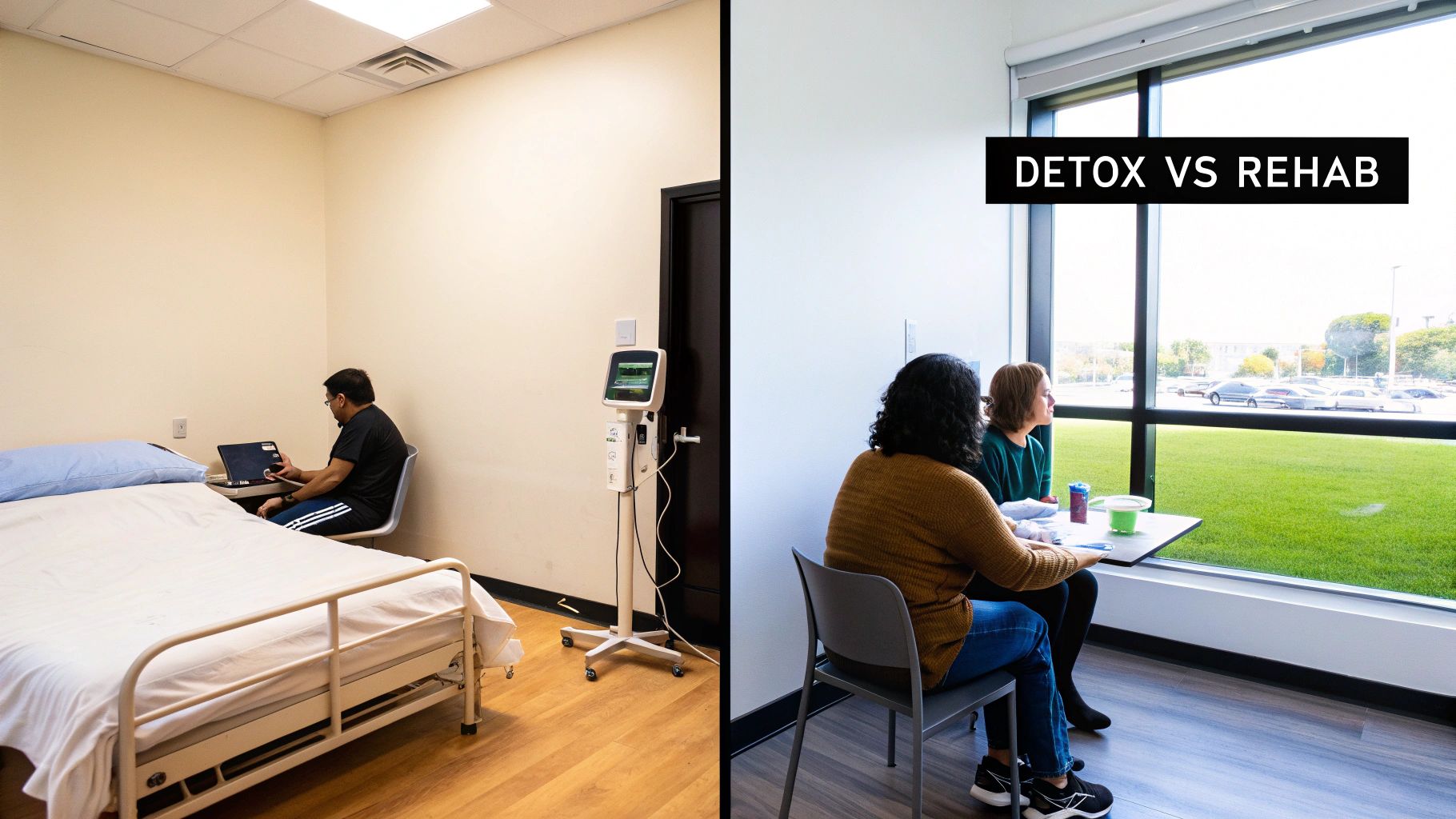
Key Differences in Purpose and Duration
Because their goals are different, their timelines are as well. Detox is a sprint, usually lasting from a few days to a week. Rehab is a marathon, with programs often lasting 30, 60, or 90 days.
The focus is also different. Detox is about medical crisis management. Rehab is about building a new foundation for your life. You can learn more about how these stages fit into addiction treatment and why both are necessary.
To make it clearer, here’s a straightforward breakdown of the key differences.
Detox vs Rehab At a Glance
The table below offers a simple, side-by-side view of how these two crucial services function.
| Characteristic | Medical Detox | Rehabilitation (Rehab) |
|---|---|---|
| Primary Goal | Physical stabilization and safe withdrawal management. | Psychological healing and behavioral change. |
| Main Focus | Managing acute withdrawal symptoms (nausea, seizures, tremors). | Individual/group therapy, skill-building, relapse prevention. |
| Typical Duration | 5–10 days, depending on the substance and severity. | 30, 60, or 90+ days in various levels of care. |
| Environment | Clinical, hospital-like setting with 24/7 medical monitoring. | Therapeutic community (residential, PHP, or IOP). |
| Staff Involved | Doctors, nurses, and medical staff. | Therapists, counselors, case managers, and medical staff. |
| Is it a Cure? | No, it is the necessary first step to prepare for treatment. | No, it is the core treatment that provides recovery tools. |
Detox is not a substitute for rehab, and rehab cannot begin without a stable, detoxed foundation. They are partners in the recovery process.
How Medical Detox Provides a Safe Foundation

Medical detox is the essential first step for many individuals with a substance use disorder. It is a structured, clinical process focused on managing the acute and often dangerous physical symptoms of withdrawal. The purpose is to safely clear drugs or alcohol from the body, creating a stable platform for the psychological work of rehab to begin.
For someone who has developed a physical dependence on substances like alcohol, opioids, or benzodiazepines, stopping "cold turkey" can be dangerous. The body has adapted to the substance, and its sudden removal can trigger severe medical complications.
This is where a licensed detox facility is critical. You are placed under 24/7 medical supervision by professionals. It is not about "toughing it out;" it is about ensuring your safety with constant monitoring and medical intervention when needed.
Managing Withdrawal Symptoms Safely
A detox center’s primary job is to manage withdrawal symptoms, keeping you as safe and comfortable as possible. The approach depends on the substance used.
- Alcohol Withdrawal: This can escalate to delirium tremens (DTs), seizures, and cardiovascular stress. Medical staff monitor vital signs and may administer medications to prevent these outcomes.
- Opioid Withdrawal: While not typically life-threatening, withdrawal can be intensely uncomfortable. Medication-Assisted Treatment (MAT) is often used to ease symptoms and stabilize the individual.
- Benzodiazepine Withdrawal: This is one of the most dangerous to manage alone due to the high risk of seizures. A medically supervised taper, where the dosage is slowly reduced, is necessary to wean the body off safely.
The core principle of medical detox is harm reduction. It replaces a chaotic withdrawal experience with a controlled, medically managed process.
By managing these physical hurdles, medical detox ensures you can enter rehab with a clear mind and a stable body. This physical stability is essential to engage meaningfully in therapy. You can learn what this involves by exploring a Newport Beach detox center.
The Clinical Environment of Detox
Detox facilities, whether standalone clinics or part of larger treatment centers in Costa Mesa or Huntington Beach, are clinical environments. They are staffed by doctors, nurses, and other medical professionals.
The focus is almost entirely on physical health. While some light counseling may be offered, the deep psychological work of rehab is not the priority. The environment is built for safety and medical care. This clinical focus is the main difference between detox and rehab—one stabilizes the body, while the other begins healing the mind.
Think of it like building a house. You would not put up walls on a shaky foundation. Medical detox is the solid, secure foundation. Once it has set, the work of building your recovery can start in rehab.
The Role of Rehab in Building Long-Term Recovery

Once your body is stable after detox, the real work of recovery begins. This next phase is rehab, where the focus shifts from physical survival to psychological healing. Detox gets you through the immediate crisis, but rehab is where you build a life that supports long-term sobriety.
The fundamental difference is that rehab addresses the "why" behind substance use. It is a structured therapeutic process designed to uncover root causes, address underlying trauma, and provide practical skills for a sober future.
Exploring Different Levels of Care
Rehab is not a one-size-fits-all experience. Quality treatment programs in the Newport Beach area offer various levels of care to match your specific situation.
- Residential or Inpatient Treatment: The most immersive option. You live at the facility 24/7 for 30, 60, or 90 days, removed from outside triggers.
- Partial Hospitalization Program (PHP): A step-down from residential, PHP provides a full schedule of therapy—usually 5-6 hours a day, 5 days a week—while you live at home or in sober living. It’s a popular choice for those in nearby Irvine.
- Intensive Outpatient Program (IOP): This flexible approach offers several hours of therapy each week, often in the evenings. IOPs are common throughout Huntington Beach and Costa Mesa, allowing people to continue with work or family commitments.
Having different levels of care is critical. National data from SAMHSA on substance abuse treatment trends shows a significant use of outpatient services, making recovery more accessible.
Rehab’s mission is to equip you with the psychological tools and coping mechanisms to handle cravings, navigate triggers, and prevent relapse. It is about creating lasting behavioral change.
The Therapeutic Process in Rehab
Therapy is the engine of an effective rehab program. Clinicians use evidence-based methods to help you identify and change thought patterns and behaviors that fuel substance use.
You will likely encounter a mix of therapeutic approaches:
- Cognitive Behavioral Therapy (CBT): A practical approach to identifying and changing destructive thinking and behavior.
- Dialectical Behavior Therapy (DBT): Teaches skills for regulating emotions, tolerating distress, and being mindful.
- Individual Therapy: Private sessions to work through personal history, trauma, and specific challenges.
- Group Counseling: Creates a sense of community and shared experience, reducing feelings of isolation.
- Family Therapy: Involves loved ones to repair relationships and build a stronger support network.
Committing to this therapeutic work helps build a foundation for a sustainable, meaningful life. To see how these pieces fit together, review the different types of addiction treatment available.
Why Detox Alone Is Not Enough for Lasting Sobriety
It is a common misunderstanding to see detox as the end of addiction treatment. Completing detox is a major accomplishment and a necessary first step, but it is just the beginning. Detox handles the body, but it does not address the complex psychological and behavioral patterns that drive substance use.
Substance use disorder is a chronic condition. It changes brain chemistry, rewires behavior, and often has roots in trauma or other mental health conditions. Detox manages the physical withdrawal and breaks chemical dependency. It does not provide the tools to live life without returning to substance use.
When a person leaves a detox facility, they return to the same environment with the same stressors and triggers. Without the therapeutic work of rehab, the risk of relapse is extremely high.
Addressing the Root Causes of Addiction
Rehab is where you address the "why" behind substance use. It offers a structured, safe space to explore root causes with the help of intensive therapy.
Here are critical things rehab offers that detox alone does not:
- Behavioral Therapies: You learn techniques like Cognitive Behavioral Therapy (CBT) to identify and change self-destructive thought patterns.
- Coping Skills Development: Rehab teaches healthy, practical ways to manage stress, boredom, and difficult emotions without substances.
- Trauma-Informed Care: Many people with substance use disorder have a history of trauma. A quality rehab program provides a safe environment to process these experiences.
- Relapse Prevention Planning: You work with therapists to create a solid plan for managing cravings and high-risk situations.
Without addressing these core psychological drivers, you remain vulnerable. Lasting recovery is about building a new foundation for your life. That work happens in rehab.
The Stark Difference in Outcomes
Long-term success rates highlight the difference between detox and rehab. While detox is a non-negotiable first step for many, following it with a comprehensive rehab program significantly improves the chances of long-term sobriety.
Statistics show that while many people complete detox, those who continue to the next level of care have better outcomes. Research shows that rehab improves recovery outcomes, making it vital for long-term success.
Completing detox without transitioning to rehab is like getting stitches for a deep wound but skipping the physical therapy needed to regain strength. The immediate crisis is over, but the underlying issue remains unaddressed.
Rehab is the essential "physical therapy" for your mind. It helps you build the psychological resilience needed to navigate a sober life. You can explore our recovery resources to better understand the full journey.
Practical Examples for Choosing the Right Care
Understanding the definitions is one thing, but knowing which level of care is needed right now is another. These real-world scenarios can help clarify the decision-making process. These examples are for informational purposes and are not medical advice.
The recovery journey often follows a clear path, starting with physical stabilization in detox before moving to the psychological work of rehab.
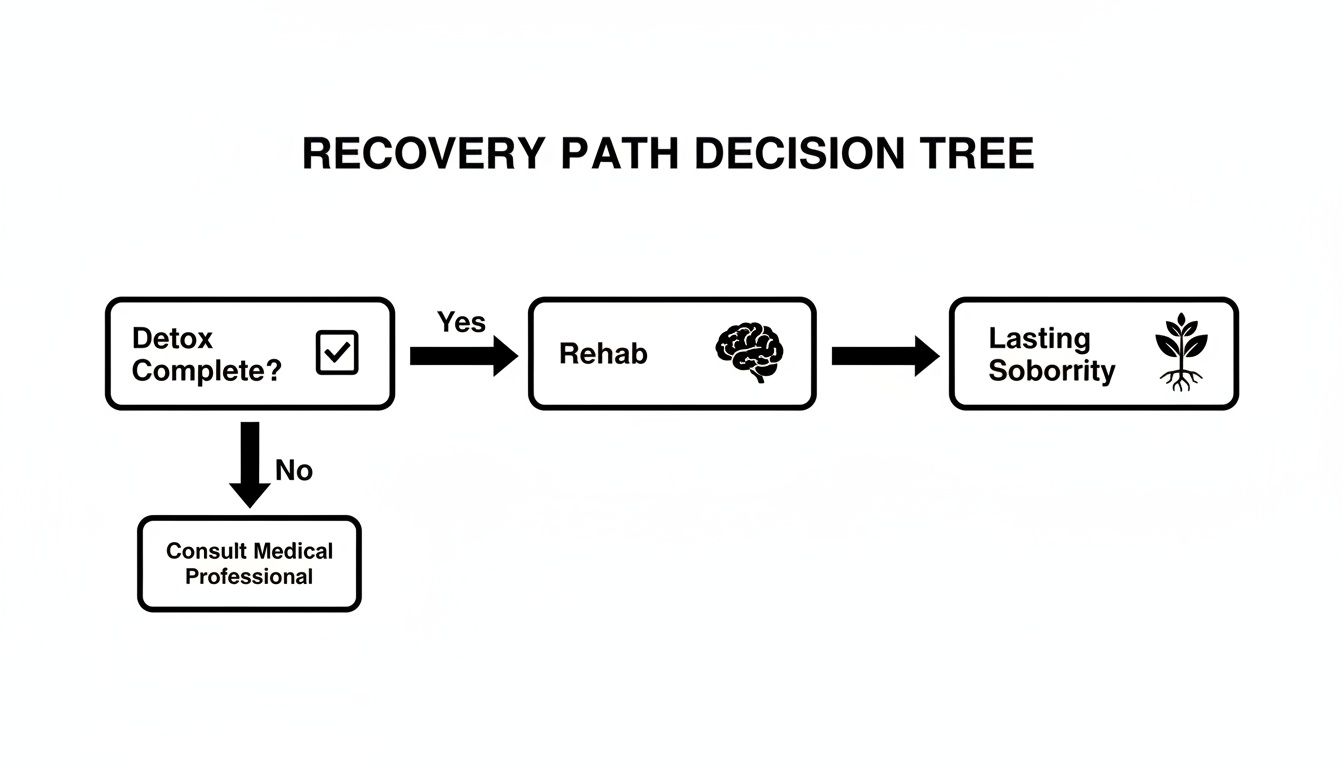
This flowchart highlights a crucial point: detox is the essential first phase focused on physical safety. Rehab is the comprehensive, longer-term process that builds the foundation for a life in recovery.
Real-World Scenarios and Next Steps
Let's break down how this works in practice.
Scenario 1: Daily Heavy Alcohol Use
A person in Costa Mesa has been drinking heavily every day for years. When they try to stop, they experience shaking, sweating, and nausea. These are signs of physical dependence.- What's Needed: Medical detox is urgent. Stopping alcohol abruptly can lead to life-threatening complications like seizures. Rehab is the goal, but only after they are medically stable.
- Actionable Next Step: Call the insurance company and ask, "What is my coverage for acute inpatient detoxification services?"
Scenario 2: Unable to Stop Using Fentanyl
A person in Huntington Beach is using fentanyl daily. While medically stable at the moment, the psychological dependence is so strong they cannot stop on their own, despite negative consequences.- What's Needed: The journey starts with medical detox to manage opioid withdrawal. From there, residential rehab is the logical next step. A 24/7 structured environment provides a buffer from triggers.
- Actionable Next Step: When researching treatment centers, ask admissions, "Do you have an integrated medical detox, or will I need to go somewhere else first?"
Scenario 3: Dependent on Benzodiazepines with a Job
A professional in Irvine has a prescription for a benzodiazepine but is taking more than prescribed. They are maintaining work and family life but feel trapped by the medication.- What's Needed: A slow, medically supervised taper in a medical detox setting is the only safe way to stop. After detox, a flexible Intensive Outpatient Program (IOP) can offer therapeutic support without requiring them to leave their job.
- Actionable Next Step: Contact local IOPs and ask, "What are your program hours, and how do you support clients transitioning from a detox facility?"
The severity of physical withdrawal is the primary indicator that medical detox is needed. Once that is complete, the right type of rehab depends on the individual's environment, support system, and psychological needs.
Questions to Ask a Newport Beach Treatment Center
When you call a facility, you are in charge. Use these questions to get a clear picture of their services.
- "What is the patient-to-staff ratio in your detox unit versus your residential program?"
- "Can you describe a typical day for someone in detox versus someone in rehab?"
- "Do you offer Medication-Assisted Treatment (MAT) during detox and into rehab?"
- "What specific therapies do you use in your rehab program, such as CBT, DBT, or EMDR?"
- "How do you address co-occurring mental health issues like anxiety or depression?"
Getting clear answers will empower you to make an informed choice. You can explore our directory of Newport Beach treatment options to begin your search.
Finding the Right Treatment in Newport Beach and Orange County
Navigating addiction treatment options can feel overwhelming. Finding the right facility in Newport Beach or Orange County comes down to a few key factors. The most important step is choosing a licensed and accredited provider. This ensures the facility meets strict standards for safety, clinical care, and ethics for both detox and rehab.
A high-quality treatment center will be transparent about its philosophy, therapies, and how it addresses co-occurring conditions. While the quiet, coastal environment of a town like Laguna Beach can be beneficial, the clinical excellence within the facility is what drives recovery.
Evaluating Local Treatment Options
As you search, focus on providers who clearly define their services. The difference between their detox and rehab programs should be clear. A reputable center will explain its medical protocols for withdrawal and detail the therapeutic framework of its rehab programs.
When comparing facilities, keep these elements in mind:
- Licensing and Accreditation: Confirm the facility is licensed by the State of California and accredited by a body like The Joint Commission or CARF.
- Levels of Care Offered: Does the provider offer a full continuum of care, from detox through outpatient programs? A smooth transition between levels is key.
- Specialized Programs: If there is a specific substance use disorder or a co-occurring mental health condition (dual diagnosis), look for centers with expertise in those areas.
- Insurance Compatibility: Ensure the provider is in-network with your insurance plan to understand the costs.
Understanding your insurance benefits is a critical first step. It empowers you to select a quality program without unexpected financial stress.
Verifying Insurance and Next Steps
Untangling insurance coverage can be a hurdle. Most reputable treatment centers in Newport Beach, Irvine, and Costa Mesa have admissions coordinators who can help you understand your benefits. They can quickly tell you what your plan covers for detox and rehab.
Have your insurance card ready when you call a provider. This allows their team to give you a clear picture of your coverage. For a head start, you can verify your insurance for addiction treatment online. Sorting this out early provides peace of mind and lets you focus on getting help.
Frequently Asked Questions About Detox and Rehab
It is natural to have questions when first exploring treatment. Below are answers to common questions about the difference between detox and rehab.
Can I Just Go to Detox and Skip Rehab?
While this is a common question, clinical reality shows that detox alone is rarely enough for lasting recovery. Detox manages the physical crisis of withdrawal but does not address the psychological roots of addiction. Think of detox as surviving the storm and rehab as learning to navigate the waters. The risk of relapse is high for those who stop after detox.
How Long Do Detox and Rehab Take?
The timeline depends on the individual, the substance used, and the severity of the substance use disorder.
- Medical Detox: This typically lasts between 5 and 10 days. The focus is on achieving medical stability.
- Rehabilitation (Rehab): Rehab programs vary in length. Common residential stays are 30, 60, or 90 days. Outpatient programs like PHP and IOP often last several months.
What Is the Difference in Cost Between Detox and Rehab?
On a per-day basis, medical detox is usually more expensive than rehab due to the intensive, 24/7 medical supervision required. However, because detox is much shorter, the total cost for detox is almost always less than the total cost of a full rehab program. Most health insurance plans cover both. The best first step is to verify your insurance coverage.
Do I Need Detox for Every Substance?
No, not every substance use disorder requires a medically supervised detox. The need for detox depends on whether stopping the substance can cause dangerous physical withdrawal symptoms.
The three substance classes that almost always require medical detox are alcohol, opioids (like heroin or fentanyl), and benzodiazepines (like Xanax or Valium). Stopping these abruptly can lead to life-threatening issues. For other substances like marijuana or stimulants, withdrawal is primarily psychological, and a person might be able to go directly into a rehab program.
Can Detox and Rehab Happen at the Same Facility?
Yes, and this is the ideal setup. Many treatment centers in the Newport Beach area offer a full continuum of care, allowing you to complete detox and transition directly into their rehab program. This provides stability, reduces stress, and ensures a consistent care team. When calling facilities, ask, "Do you offer integrated detox and residential services?"
FAQs on the Difference Between Detox and Rehab
Here’s a quick-glance table to summarize the most important distinctions.
| Question | Answer |
|---|---|
| What's the main goal of detox? | To safely manage the physical symptoms of withdrawal under medical supervision until the body is stable. |
| What's the main goal of rehab? | To address the psychological, behavioral, and emotional aspects of addiction through therapy and education. |
| Who is detox for? | Individuals physically dependent on substances like alcohol, opioids, or benzodiazepines, whose withdrawal can be dangerous. |
| Who is rehab for? | Anyone with a substance use disorder who needs to learn coping skills and relapse prevention strategies for long-term recovery. |
| Is therapy a big part of detox? | No. The focus is almost entirely on medical stability and physical comfort, not intensive therapy. |
| Is therapy a big part of rehab? | Yes, it is the core component. It includes individual, group, and family therapy. |
| Can I skip one and just do the other? | For physical dependencies, you must start with detox. Skipping rehab after detox leads to a very high risk of relapse. |
Ultimately, choosing the right program is about matching the level of care to your specific needs. Understanding these differences is the best way to start.
At Newport Beach Rehab, our goal is to provide clear, reliable information to help you find the right path to recovery.
Explore Levels of Care in Newport Beach
Sources
- Substance Abuse and Mental Health Services Administration (SAMHSA). (2021). National Survey of Substance Abuse Treatment Services (N-SSATS): 2020. Data on Substance Abuse Treatment Facilities.
- Legacy Healing Center. (2023). Rehab Success Rate Statistics.